Oct 22, 2026

Sep 11, 2026
Electric car charging points are rarely entirely free, with unpaid access limited to specific destination amenities like municipal libraries, selected retail centers, hotels, and employer-sponsored workplace lots. Standard public charging operates on a paid basis, charging $0.20–$0.40 per kWh for Level 2 AC power and $0.40–$0.65+ per kWh for direct current fast infrastructure. Home charging remains the most cost-effective solution, whereas free public chargers serve as convenience perks subject to session caps, patron restrictions, and parking tariffs.

In three decades covering industrial power electronics and global manufacturing lines, I have witnessed energy delivery evolve from manual mechanical pumps to networked digital dispensers. One question from new electric vehicle drivers remains constant: "Can I run my car without paying for electricity?" The straightforward answer requires understanding grid economics. Electricity is an industrial commodity. While drivers may encounter plugs that cost zero dollars at the point of consumption, someone always foots the generation and connection bill.
Public infrastructure involves substantial capital expenditure, grid interconnection fees, and continuous upkeep. As global EV adoption scales, the early promotional era of boundless, unrestricted open charging is shrinking. Municipalities, property developers, and retail corporations deploy charging infrastructure under strategic budget lines rather than pure philanthropy.
FAQ: Is Tesla Supercharging free for all Tesla vehicles?
No. Unlimited complimentary Supercharging remains available solely to original owners of select early Model S and Model X vehicles sold with legacy promotional packages. Modern retail Tesla deliveries require users to pay standard variable rates based on kilowatt-hour consumption or connection time via the Tesla mobile app.
Free charging exists, provided you understand where to look and recognize the operational constraints tied to each location. These access points rely on standard Alternating Current Level 2 hardware delivering 3.3 kW to 11 kW, meant for dwell times of two hours or more.
| Location Category | Typical Hardware | Access Terms | Critical Caveats |
|---|---|---|---|
| Grocery Stores & Supermarkets | Level 2 AC (7.2 kW) | Active store customers | 30–60 minute parking limits; receipt scans required at select locations |
| Hotels & Destination Resorts | Level 2 Destination Wallboxes | Registered overnight guests | Requires guest reservation; parking or valet surcharge may apply |
| Libraries & Civic Centers | Level 2 Public Pedestals | General public during operating hours | Enforced 2-hour cutoff; idle ticketing after complete charge |
| Workplace Facilities | Level 2 AC Fleet/Staff Arrays | Authorized personnel & contractors | Badge access; scheduled rotation policies |
| Auto Dealerships | Level 2 / Occasional DC Units | Brand-affiliated motorists | Locked gates after business hours; priority given to internal inventory |
Drivers leverage crowdsourced navigation platforms like PlugShare or network apps to filter by "$0" or "free" locations. Checking recent check-in photos and user reviews confirms whether a station remains functional and unpaid, as private owners frequently switch billing settings from complimentary to standard paid configurations without prior notice.
Total fueling expenditure hinges directly on where the connection happens. Operating an electric vehicle delivers measurable financial savings when drivers structure charging routines around stationary hours at home or work rather than depending on public infrastructure.
| Charging Environment | Average Cost (per kWh) | Convenience Rating | Charging Speed Profile |
|---|---|---|---|
| Residential (Off-Peak Home) | $0.10 – $0.18 | High (Plug in overnight) | 4–8 hours to full charge (Level 2) |
| Workplace Station | $0.00 (Subsidized) to $0.15 | High (Charges during shift) | 4–8 hours to full charge (Level 2) |
| Public Level 2 | $0.20 – $0.35 (or Free with limits) | Moderate (Requires coordination) | 15–30 miles added per hour |
| Public DC Fast Station | $0.40 – $0.65+ | Location-dependent | 10% to 80% in 20–40 minutes |
Residential charging represents the gold standard for daily affordability. Tapping a dedicated 240V circuit overnight at standard residential utility rates keeps costs low. For commercial operators looking to support vehicle fleets or public parking spaces with rapid turnarounds, installing high-capacity hardware like an enterprise DC Fast Charger provides rapid throughput that level 2 hardware cannot match.
The gap between free Level 2 AC chargers and free DC fast chargers comes down to hardware investment. Standard AC charging equipment costs between $500 and $2,000 per dispenser, with manageable connection requirements that tie directly into commercial 208V/240V building panels.
In contrast, commercial Direct Current fast charging requires dedicated step-down transformers, liquid-cooled cabling, and substantial utility interconnections. A complete 50 kW to 350 kW installation runs from $40,000 to over $150,000 per stall. On top of that, electric utilities charge commercial operators peak demand fees based on the highest power spike in a billing cycle. Consequently, commercial operators cannot afford to provide high-speed DC charging without charging user fees.
FAQ: Are free DC fast chargers available on road trips?
Almost never. Free DC fast charging is limited to initial promotional credits bundled by automakers upon purchasing a new EV, government-funded highway demonstration corridors, or temporary ribbon-cutting promotions. Routine highway fast charging operates under paid network tariffs.
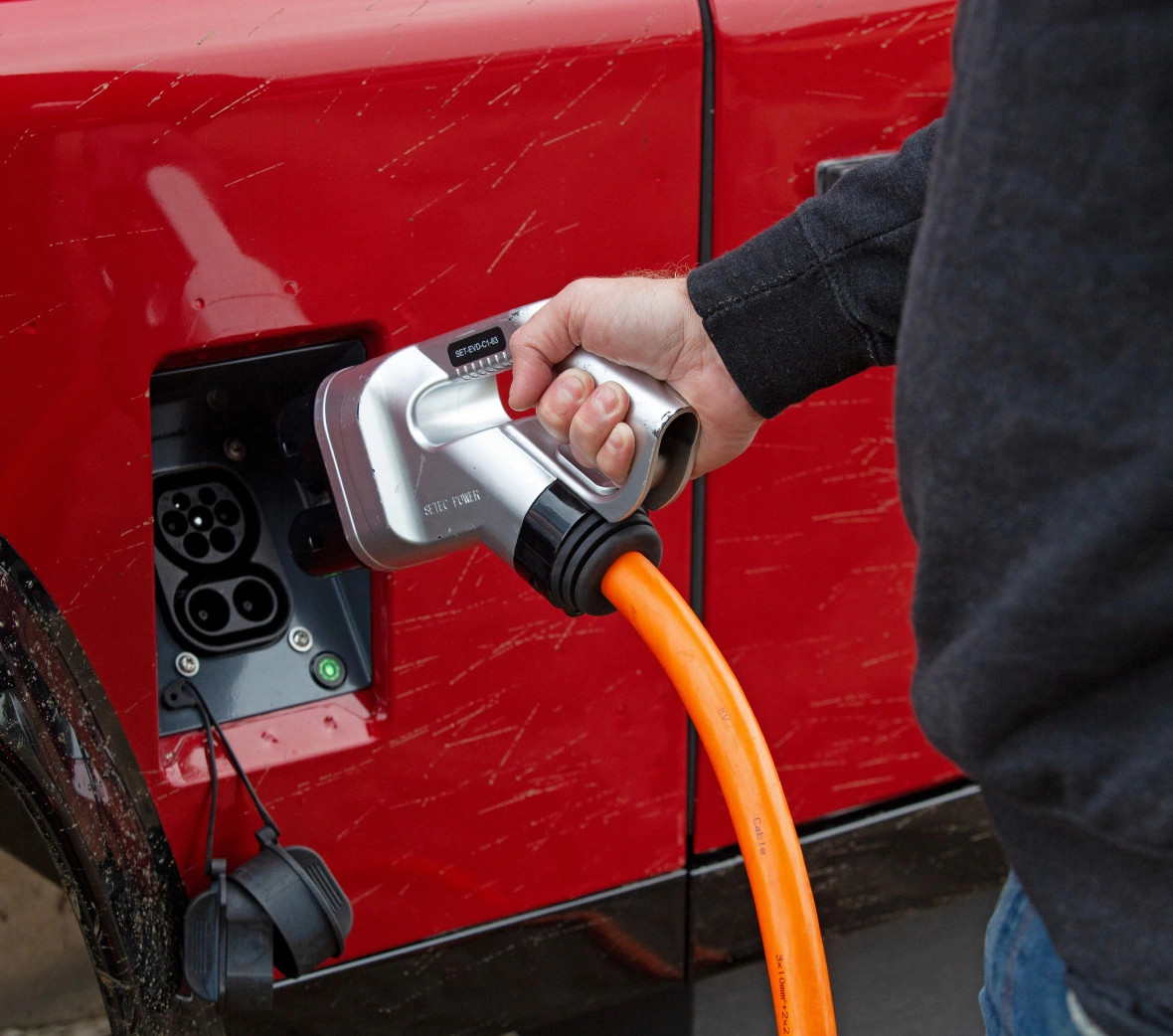
When selecting fast-charging hardware for commercial deployments, sites deploy dual-protocol equipment like a universal CCS Charger to ensure compatibility across European and North American vehicle platforms without locking drivers into one vehicle brand.
When a commercial establishment provides electricity without asking for payment, the expenditure is treated as an operational acquisition cost. In engineering and commercial planning, free charging falls into four clear business models:
Loss Leader / Retail Dwell Time: Retail establishments, grocery stores, and lifestyle centers install chargers to draw affluent motorists. EV drivers remain on-site for 45 to 90 minutes while charging, spending money on food, groceries, and merchandise that offsets the property's utility bill.
Ad-Supported Networks: Companies like Volta (part of Shell) deploy charging pedestals equipped with large high-definition digital display screens. Brand advertisements shown on the displays cover the cost of the electricity, allowing the station to provide complimentary Level 2 power to drivers.
Employee Recruitment and ESG Mandates: Corporate offices offer complimentary workplace charging as an employee benefit, helping corporations meet carbon footprint reduction targets and environmental sustainability certifications.
Municipal Clean Air Subsidies: Local governments leverage environmental grants and clean-air funds to offer free charging in public parking garages, encouraging electric vehicle adoption in downtown districts.
Automakers often advertise "two years of free charging" with the purchase of a new EV. These arrangements are contract partnerships between car manufacturers and public charging networks (such as Electrify America, EVgo, or Ionity). The automaker purchases bulk charging capacity or credits from the network operator and includes it in the vehicle's retail price.
Before treating these promotions as pure savings, review the promotional terms:
Session Duration Caps: Complimentary charging is usually restricted to 30-minute fast charging or 60-minute Level 2 sessions. Exceeding the window triggers standard per-minute or per-kWh pricing.
Cooldown Periods: Networks often enforce mandatory 60-minute wait periods between free sessions to prevent drivers from unplugging and immediately reconnecting.
Idle Fees: Leaving the vehicle plugged in after charging completes incurs idle fees ranging from $0.50 to $1.00 per minute, regardless of promotional plan status.
Using a "free" charging station can still incur costs if you miss the posted site rules. Operators protect themselves against station abuse through clear local restrictions:
Garage and Metered Parking Fees: A charger may deliver free electricity, but sits inside a municipal structure charging $15 to $30 for parking access.
Strict Time Enforcements: Municipal charging zones often carry local traffic ordinances limiting parking to two or three hours. Vehicles exceeding the posted window face municipal parking tickets even while actively charging.
Shared Station Etiquette: Because free public Level 2 plugs remain scarce, proper protocol dictates moving your vehicle once your battery hits 80% or when the session ends, freeing up the terminal for fellow drivers.
Electric car charging points are not uniformly free. Complimentary charging remains an occasional amenity rather than a dependable primary fueling strategy. While smart drivers can take advantage of free Level 2 charging while grocery shopping, staying at hotels, or working at corporate campuses, relying entirely on unpaid public power leads to long wait times and inconsistent access.
The most dependable approach pairs regular low-cost residential charging during off-peak hours with strategic use of commercial public infrastructure when speed matters. By checking local station terms and understanding equipment capabilities, you can navigate the charging landscape smoothly while keeping total energy expenses low.
Authoritative industry reports and market charging data referenced in this guide: US Department of Energy (AFDC) Charging Infrastructure Directory, International Energy Agency (IEA) Global EV Infrastructure Outlook, and BloombergNEF Electric Fleet & Public Charging Economics.