Oct 06, 2026

Oct 06, 2026
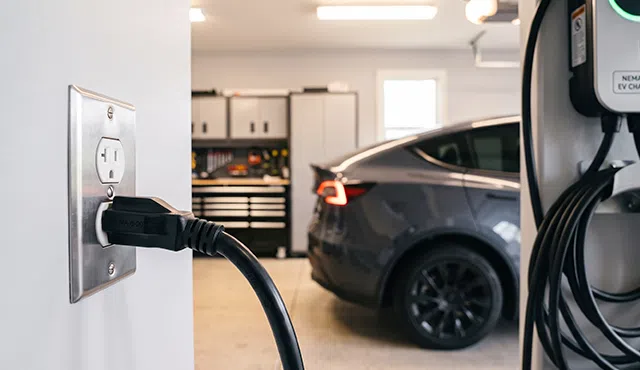
A NEMA 6-20 plug is a three-prong, 250V configuration delivering up to 3.8 kW of continuous Level 2 power on a dedicated 20-amp circuit at 16 amps. Operating on two hot legs and a ground conductor without a neutral wire, it delivers 10 to 18 miles of range per hour. It serves as an economical middle-tier upgrade for homes with limited panel capacity, avoiding the thousands of dollars required for heavy 50-amp service overhauls.
2. Technical Specifications: Voltage, Amperage, and the 80% Rule
4. NEMA 6-20 vs. NEMA 5-15 vs. NEMA 14-50: The Head-to-Head Comparison
6. Electrical Code Compliance, Circuit Safety, and Installation Steps
Having inspected industrial power lines, switchgear enclosures, and distribution grids for over three decades across North America and Europe, I frequently witness EV drivers fall into an expensive trap: assuming that Level 2 residential charging mandates a massive 50-amp circuit. That misconception leads to thousands in unnecessary panel overhauls.
Enter the NEMA 6-20. Standardized by the National Electrical Manufacturers Association, this connection format is a straight-blade, grounding-type plug configured for 250V applications up to 20 amps. Mechanically, the plug features one vertical blade, one horizontal blade (T-slot orientation on the 6-20R receptacle), and a semi-round grounding pin.
Electrically, the circuit utilizes two hot lines (Line 1 and Line 2) and an equipment ground. It omits a neutral wire. Because electric vehicle onboard chargers (OBC) use 240V line-to-line potential to feed the high-voltage pack, the absence of a neutral wire creates zero functional disadvantage. You frequently spot these outlets powering commercial kitchen gear, window heat pumps, table saws, and workshop air compressors.
FAQ: Can I plug a standard 120V household plug into a NEMA 6-20 receptacle?
No. The perpendicular blade geometry prevents anyone from inserting a standard 120V NEMA 5-15 or 5-20 plug into a 240V line. This mechanical interlock protects standard household appliances from instantaneous overvoltage destruction.
A frequent error among DIY installers is multiplying nominal breaker amps directly by voltage to calculate continuous charging delivery ($240 ext{V} imes 20 ext{A} = 4.8 ext{ kW}$). In reality, that calculation violates electrical fire codes.
Under the National Electrical Code (NEC Article 625), vehicle charging constitutes a continuous duty load because current draws run uninterrupted for three hours or longer. Continuous branch circuits must operate at a maximum of 80% of nominal breaker rating:
$$ ext{Continuous Operating Amperage} = 20 ext{A} imes 0.80 = 16 ext{A}$$
| Parameter | Residential 240V Split-Phase | Commercial 208V Three-Phase Feed |
|---|---|---|
| Circuit Breaker Rating | 20A (Dual-Pole) | 20A (Dual-Pole / 2 Legs of 208V) |
| Continuous Current Limit | 16 Amps | 16 Amps |
| Gross Power Delivery | 3.84 kW ($240 ext{V} imes 16 ext{A}$) | 3.33 kW ($208 ext{V} imes 16 ext{A}$) |
| Net Delivery to Cells (~90% Eff.) | ~3.45 kW | ~3.00 kW |
While 3.8 kW delivers less speed than a 48-amp hardwired unit (11.5 kW), it outpaces standard 120V Level 1 outlets (1.4 kW) by 2.7 times.
A vehicle driven 35 to 45 miles daily consumes roughly 10 to 14 kWh of stored energy. Replenishing this deficit requires understanding delivery rates across vehicle classes.
A NEMA 6-20 station running at 240V/16A delivers approximately 3.84 kW gross. Accounting for standard thermal conversion losses within the vehicle rectifier, net energy intake clocks in near 3.45 kW:
Efficient Compact EV (e.g., Hyundai Ioniq 6, Tesla Model 3): Consuming roughly 240 Wh/mile, 3.45 kW net yields approximately 14 to 15 miles of added range per hour. An 8-hour overnight session recovers 115 miles.
Midsize Crossover (e.g., Ford Mustang Mach-E, VW ID.4): Consuming roughly 300 Wh/mile, the connection adds 11 to 12 miles per hour, returning roughly 90 miles overnight.
Full-Size Pickup or Large SUV (e.g., Ford F-150 Lightning, Rivian R1T): With consumption reaching 450 Wh/mile, the outlet yields 7.5 to 8 miles per hour, replenishing 60 miles overnight.
For daily suburban driving, this recovery window satisfies actual vehicle usage patterns without straining local substation circuits.
Drivers frequently balance initial deployment cost against replenishment duration when selecting a physical plug type.
| Specification / Metric | NEMA 5-15 (Level 1) | NEMA 6-20 (Entry Level 2) | NEMA 14-50 (Heavy Level 2) |
|---|---|---|---|
| Nominal Voltage | 120V AC (Single-Phase) | 240V AC (Split-Phase) | 120V / 240V Split-Phase |
| Circuit Breaker Rating | 15A (Single-Pole) | 20A (Dual-Pole) | 50A (Dual-Pole) |
| Continuous Load Current | 12A Continuous | 16A Continuous | 40A Continuous |
| Charging Power | 1.44 kW | 3.84 kW | 9.60 kW |
| Wire Gauge (Copper) | 14 AWG | 12 AWG (Inexpensive) | 6 AWG (Heavy / Expensive) |
| Conductor Count | 3 (Hot, Neutral, Ground) | 3 (Hot, Hot, Ground) | 4 (Hot, Hot, Neutral, Ground) |
| Full Recharge (60 kWh Pack) | 45–50 Hours | 16–18 Hours | 6–7 Hours |
Installing a NEMA 14-50 often requires running thick, expensive 6 AWG copper conductor, alongside pulling a neutral wire that the vehicle never uses. Conversely, running 12 AWG Romex (NM-B) or THHN wire in conduit for a 6-20 outlet cuts material costs by over 60%.
A NEMA 6-20 outlet is not meant to replace high-throughput corridor stations. It represents an engineering compromise for distinct residential scenarios:
Homes with 100-Amp Main Service Panels: Older homes built before 1980 frequently operate on 100-amp service. Adding a 50A breaker for a NEMA 14-50 triggers an expensive panel overhaul costing $2,500 to $4,500. A 20-amp, 240V dual-pole circuit fits comfortably within tighter electrical budgets.
Rental Garages and Townhomes: Landlords hesitant to authorize conduit runs for heavy commercial infrastructure often approve a modest 20-amp 240V circuit that uses standard 12-gauge wiring.
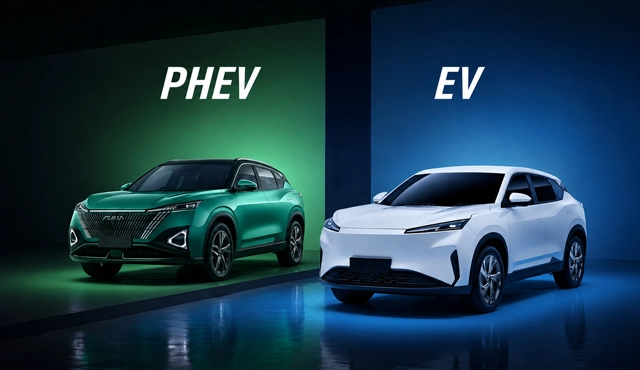
PHEV Owners: Plug-in hybrids carry smaller 10 kWh to 20 kWh battery packs. A NEMA 6-20 charges them fully in 2.5 to 4.5 hours.
Long Conduit Runs to Detached Outbuildings: Running 100 feet of heavy 6-gauge wire to a detached workshop spikes installation costs. Pulling 12 AWG copper saves hundreds in conduit and metal wire expenses.
Treating high-voltage charging as a DIY project without consulting engineering standards invites thermal failure. A circuit carrying 16 amps continuously generates ongoing heat dissipation inside switchgear enclosures.
Professional installation adheres to the following safety protocols:
Dedicated Branch Circuit: NEC Article 625 mandates that EVSE outlets sit on a dedicated circuit. No supplementary lighting, receptacles, or workshop machines may share this run.
GFCI Protection Requirements: Under NEC 2020/2023 Article 625.54, all receptacles installed for EV charging—regardless of voltage—must feature ground-fault circuit-interrupter protection. Installers must fit a two-pole Class A GFCI breaker in the service panel.
Industrial-Grade Receptacles: Avoid generic residential-grade $6 outlets. Continuous thermal cycling weakens cheap internal spring-brass contacts, inducing contact resistance, terminal melting, and fire risk. Specify industrial-grade units (such as Hubbell, Bryant, or Leviton Industrial).
Conductor Sizing: Run 12 AWG solid copper minimum for runs under 50 feet. For distant garages exceeding 75 feet, upsize conductors to 10 AWG to eliminate resistive voltage drop.
Not every portable cable matches this outlet format. Sourcing compatible hardware requires reviewing specific equipment flags:
Factory Mobile Connectors with Modular Pigtails: Units like the Tesla Mobile Connector, Ford Mobile Charger, or J+ BOOSTER offer swappable manufacturer-certified NEMA 6-20 adapter plugs. The internal microchip inside the adapter communicates directly with the controller, capping maximum load at 16A automatically.
Third-Party EVSE with Native 6-20 Plugs: Standalone portable units from vetted suppliers arrive wired with molded NEMA 6-20P terminations, rated for outdoor IP65/NEMA 4X service.
The Danger of Uncertified Adapters: Never buy unlisted marketplace adapter cords that adapt a NEMA 6-20 outlet into a NEMA 14-50 socket without an integrated fuse or circuit-limiting resistor. If an unmanaged 32A vehicle connects to that configuration, the circuit draws double its designed capacity, melting wiring inside walls before standard breakers trip.
For installations where high daily vehicle turnover demands immediate charging, properties bypass AC wallboxes altogether in favor of commercial DC Fast Charger infrastructure.
Commercial fleet yards, airport long-term parking garages, and multi-unit housing developments handle vehicles parked for 8 to 24 hours. Installing 40A stations across 50 stalls requires megawatts of power that local utilities cannot supply without multi-million-dollar substation extensions.
Deploying clustered NEMA 6-20 circuits (or low-power 16A hardwired units) lets developers power three times as many parking stalls on the same transformer capacity. However, for commercial transit corridors and retail centers where dwell time is limited to 20 minutes, site operators deploy high-voltage systems like a standardized CCS Charger.
Confusing NEMA 6-20 with NEMA 5-20: A NEMA 5-20 outlet is a 120V socket (one T-slot, one vertical slot). A NEMA 6-20 is a 240V socket (one horizontal slot, one vertical slot). Forcing mismatched pins breaks terminal blocks.
Using Cheap Extension Cords: Never connect an undersized 16-gauge consumer extension cord between the outlet and your charger. Sustained 16A draw melts standard extension cable jackets.
Ignoring Commercial 208V Supply: In commercial facilities, utility feeds supply 208V rather than 240V split-phase. At 208V, continuous charging power drops from 3.8 kW down to 3.3 kW ($208 ext{V} imes 16 ext{A}$), extending recharge times by roughly 15%.
Q: Can I run a NEMA 6-20 on an existing 15-amp breaker?
No. Installing a 20A receptacle on a 15A circuit violates NEC 210.21(B). The breaker, wiring, and receptacle must match. A 15-amp circuit requires a NEMA 6-15 configuration limited to 12A continuous output.
Q: Does charging on a NEMA 6-20 save money on electricity bills?
The cost per kilowatt-hour remains identical. However, Level 2 charging runs at roughly 90% efficiency, compared to 75% to 80% on Level 1. By avoiding lengthy thermal pump and onboard processor wake states, 240V charging saves 10% to 15% in wasted standby energy.
Q: Does a NEMA 6-20 require a neutral wire?
No. The 6-series NEMA standard uses two ungrounded hot legs and an equipment ground conductor. No neutral wire is pulled.
The NEMA 6-20 plug represents one of the most underrated, cost-effective charging solutions in modern residential electrical design. While headline-grabbing 48-amp charging stations dominate marketing campaigns, the humble 240V/20A circuit delivers everything a typical daily commuter requires: dependable overnight range replenishment, affordable 12-gauge wiring, minimal installation disruption, and relief from costly main electrical service upgrades.
By pairing an industrial-grade receptacle with an approved, certified EVSE, you convert an ordinary workshop circuit into a safe, code-compliant charging setup engineered to power your vehicle for years to come.
Technical references and regulatory standards cited in this engineering guide:
US Department of Energy (AFDC) Residential Infrastructure Guidelines,
NFPA 70: National Electrical Code (NEC Article 625),
International Energy Agency (IEA) Global EV Charging Infrastructure Analysis.