Oct 15, 2026

Sep 03, 2026
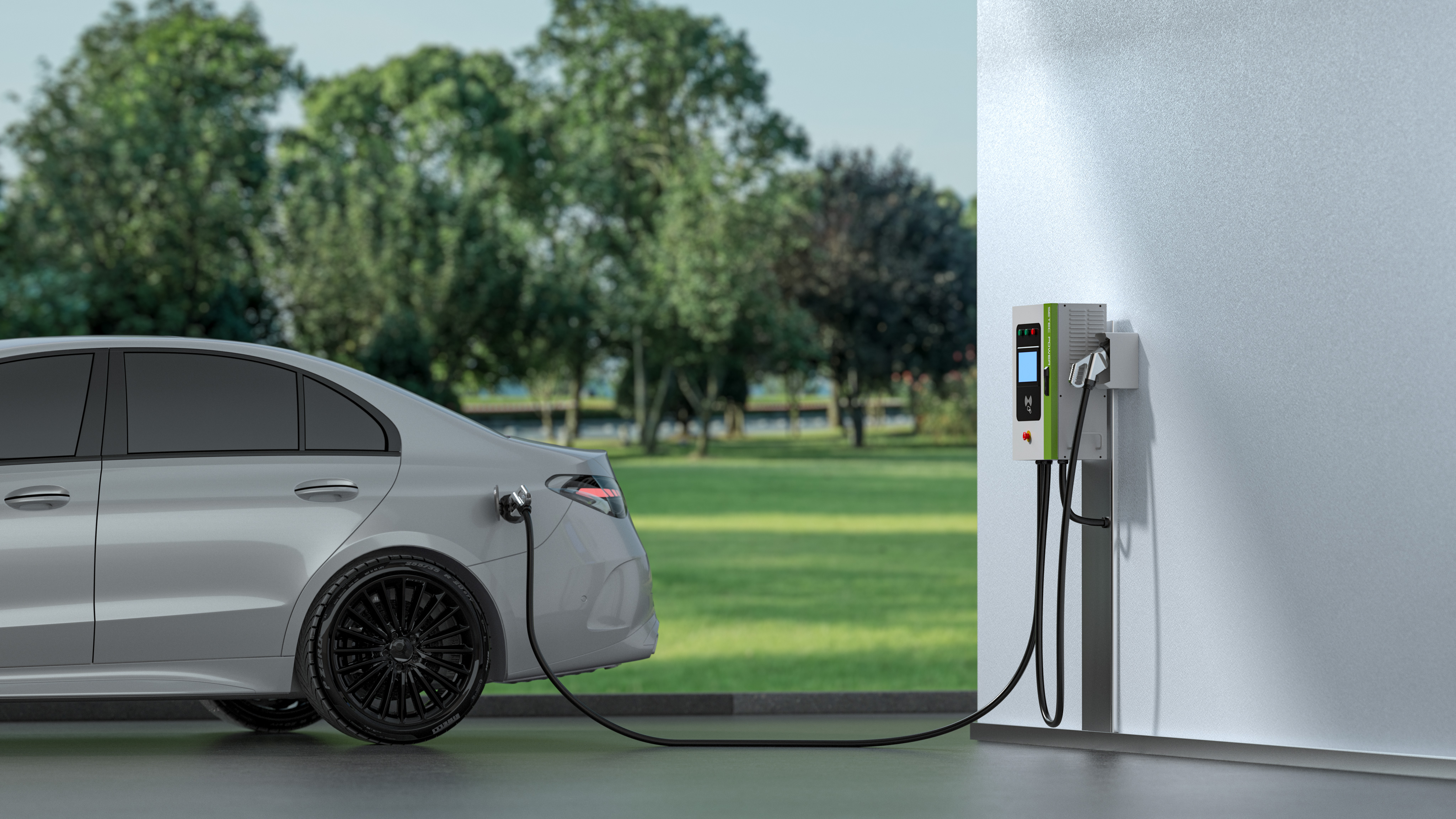
Level 2 charging delivers 208V to 240V of alternating current (AC) at 3.3 kW to 19.2 kW, replenishing 12 to 60 miles of range per hour. It serves as the primary charging method for homes, workplaces, and commercial fleets, converting grid power via the vehicle's onboard converter to fully recharge a standard battery pack in 4 to 8 hours.
In power distribution and automotive manufacturing, the transition to electrification requires distinct charging tiers to balance hardware expense, battery longevity, and replenishment speed. Level 2 charging represents the middle tier of vehicle electrification, bridging the gap between slow 120V household trickle charging and high-capital megawatt DC systems.
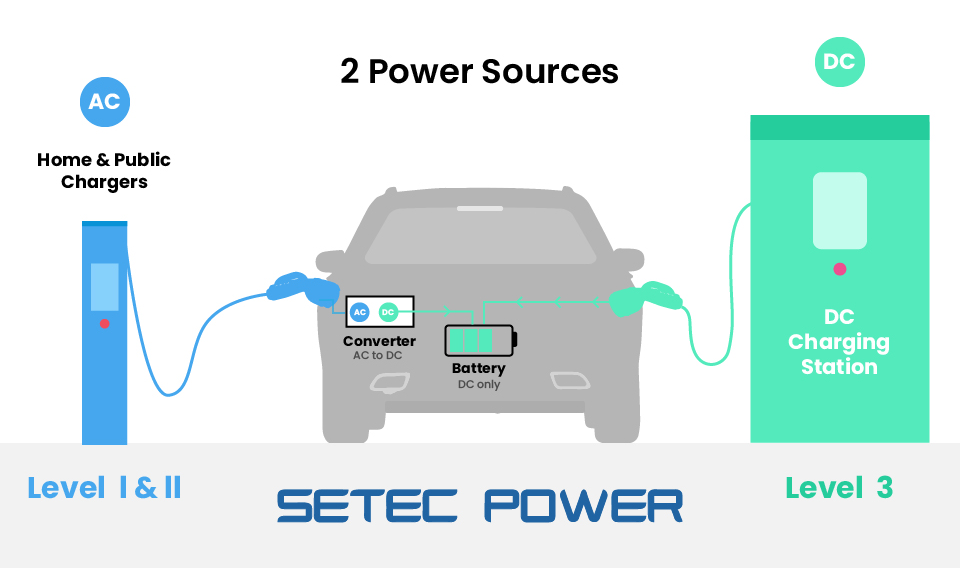
Level 2 systems operate on standard split-phase 240-volt residential circuits or 208-volt three-phase commercial feeds. Rather than pushing raw high-voltage direct current (DC) straight into battery cells, Level 2 hardware delivers safe alternating current to the vehicle. The vehicle’s internal on-board charger (OBC) rectifies this AC supply into DC energy to pack the battery cells.
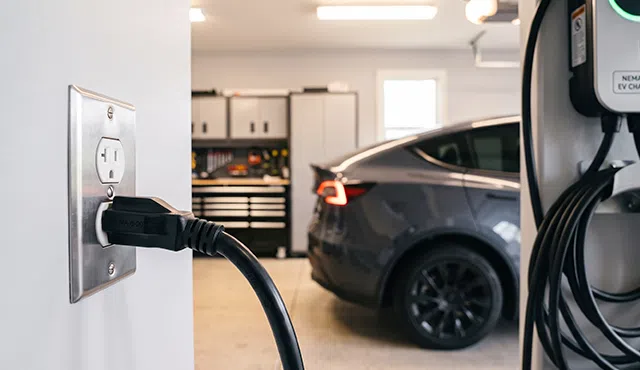
FAQ: Can I plug a Level 2 charger into a standard wall socket?
No. Standard North American household receptacles run at 120 volts on 15-amp or 20-amp breakers (Level 1). Level 2 charging requires a dedicated 208V to 240V circuit, matching the electrical demands of an electric oven, industrial compressor, or clothes dryer.
Technically speaking, the wallbox mounted in your garage or parking bay is not a power converter. The industry labels this unit as Electric Vehicle Supply Equipment (EVSE). Its primary engineering role is electrical isolation, protection, and dynamic communication.
The operational sequence of a Level 2 session follows strict industrial control logic:
Physical Interlock and Ground Verification: Once the connector mates with the vehicle inlet, the EVSE verifies continuous system grounding before closing any contactors.
Pilot Signal Negotiation: The station emits a 1 kHz pulse-width modulation (PWM) square wave across the Control Pilot line. This handshake confirms the maximum allowable continuous amperage between the station wiring and the car's control software.
Safety Circuit Engagement: High-power electromechanical relays clamp closed inside the wallbox, routing 240V AC power down the insulated cable.
On-Board AC-to-DC Conversion: The vehicle’s internal OBC handles the thermal management, rectifies the current, step-regulates voltage, and feeds DC power to the lithium-ion matrix.
Continuous Safety Monitoring: Integrated sensors continuously track residual current (ground fault detection), line voltage sag, pin temperature, and pilot continuity, instantly killing power if communication breaks.
Understanding where Level 2 fits across the mobility spectrum prevents misallocated capital and daily operational headaches. While Level 1 handles emergency top-offs and Level 3 enables rapid highway transit, Level 2 serves as the daily workhorse for vehicles parked during work shifts or overnight rest.
| Parameter | Level 1 (Trickle AC) | Level 2 (Standard AC) | Level 3 (DC Fast Charging) |
|---|---|---|---|
| Input Voltage | 120V AC (1-phase) | 208V–240V AC (Split/3-phase) | 400V–1000V DC (Direct to pack) |
| Current Rating | 12A – 16A | 16A – 80A (Common: 32A–48A) | 100A – 500A+ (Liquid-cooled) |
| Power Delivery | 1.4 kW – 1.9 kW | 3.3 kW – 19.2 kW (Typical: 7.2–11.5 kW) | 50 kW – 350 kW+ |
| Range Per Hour | 3 – 5 miles | 14 – 45 miles | 150 – 350+ miles (10-80% in 20-30 min) |
| Hardware & Site Cost | $0 – $300 (Included with car) | $500 – $2,500 installed | $25,000 – $150,000+ |
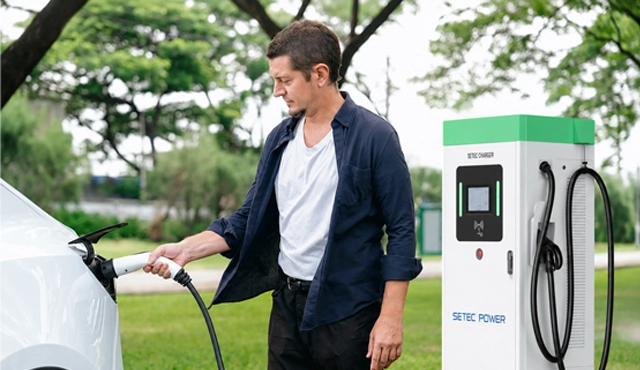
While Level 2 is the standard for depot overnight dwell times, high-turnover logistics fleets and highway plazas require dedicated hardware. For heavy-duty commercial demands, deploying a commercial-grade DC Fast Charger minimizes bay turnaround times from hours to minutes.
A frequent error among fleet operators and homeowners is buying an oversized EVSE without checking the vehicle's internal on-board charger limitations. An EVSE rated at 19.2 kW (80 amps) will not push 19.2 kW into a car equipped with a 7.7 kW internal rectifier. The vehicle's onboard converter always acts as the bottleneck.
Under the National Electrical Code (NEC Article 625), EV charging is defined as a continuous duty load. This requires continuous loads to operate at no more than 80% of the circuit breaker's rated nominal capacity:
24-Amp Charging (5.7 kW): Demands a 30-Amp dedicated dual-pole breaker.
32-Amp Charging (7.7 kW): Demands a 40-Amp dedicated dual-pole breaker (Common NEMA 14-50 plug setup).
40-Amp Charging (9.6 kW): Demands a 50-Amp dedicated dual-pole breaker.
48-Amp Charging (11.5 kW): Demands a 60-Amp breaker; mandates hardwired conduit wiring (no consumer plug permitted by code).
80-Amp Charging (19.2 kW): Demands a 100-Amp subpanel feed; common in commercial fleet yards or dual-motor luxury architectures.
FAQ: Does fast AC Level 2 charging damage the traction battery over time?
No. Level 2 AC charging operates within the battery's passive electrochemical comfort zone. Because thermal stress and active ion degradation primarily spike under high-amperage direct current (>100 kW), daily Level 2 charging provides the highest battery cell cycle life.
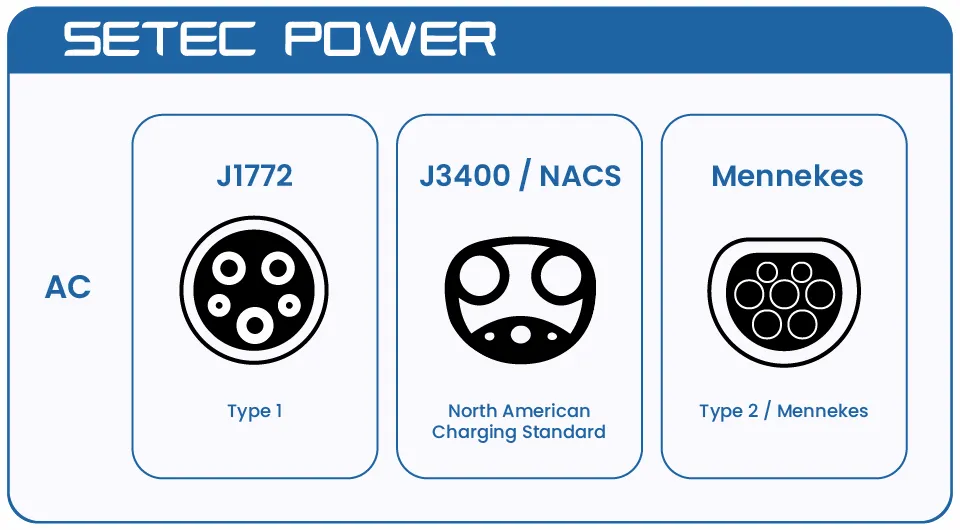
Physical interoperability is central to charging infrastructure. Across global territories, the hardware interfaces fall into standardized mechanical footprints:
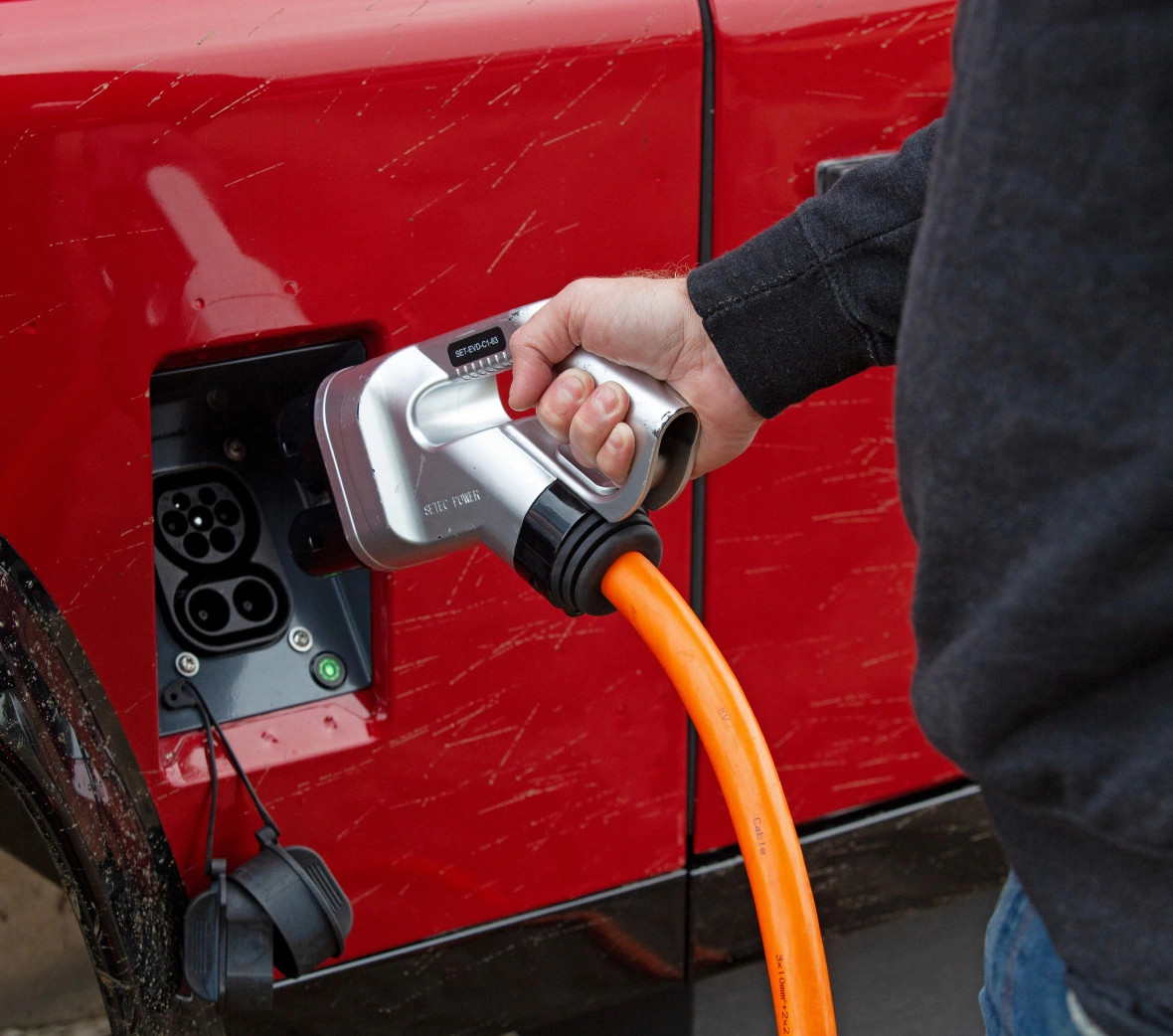
SAE J1772 (Type 1): The historical standard for North American and Japanese single-phase AC charging. It features a 5-pin circular connector incorporating two AC hot legs, ground, Control Pilot, and Proximity Pilot lines.
SAE J3400 / NACS (North American Charging Standard): Originating with Tesla and standardized across North America, this compact connector merges single-phase AC charging and high-voltage DC fast charging into the exact same pin terminals.
IEC 62196-2 (Type 2 / Mennekes): The mandated European standard. Unlike North American single-phase setups, European Type 2 supports 400V three-phase grid power natively, allowing Level 2 AC stations to deliver up to 22 kW directly at shopping parks and street curbs.
For systems handling both destination charging and rapid highway transit, public hardware relies on integrated connector standards like the CCS Charger, which combines the Type 1 or Type 2 AC pinout with secondary DC contacts.
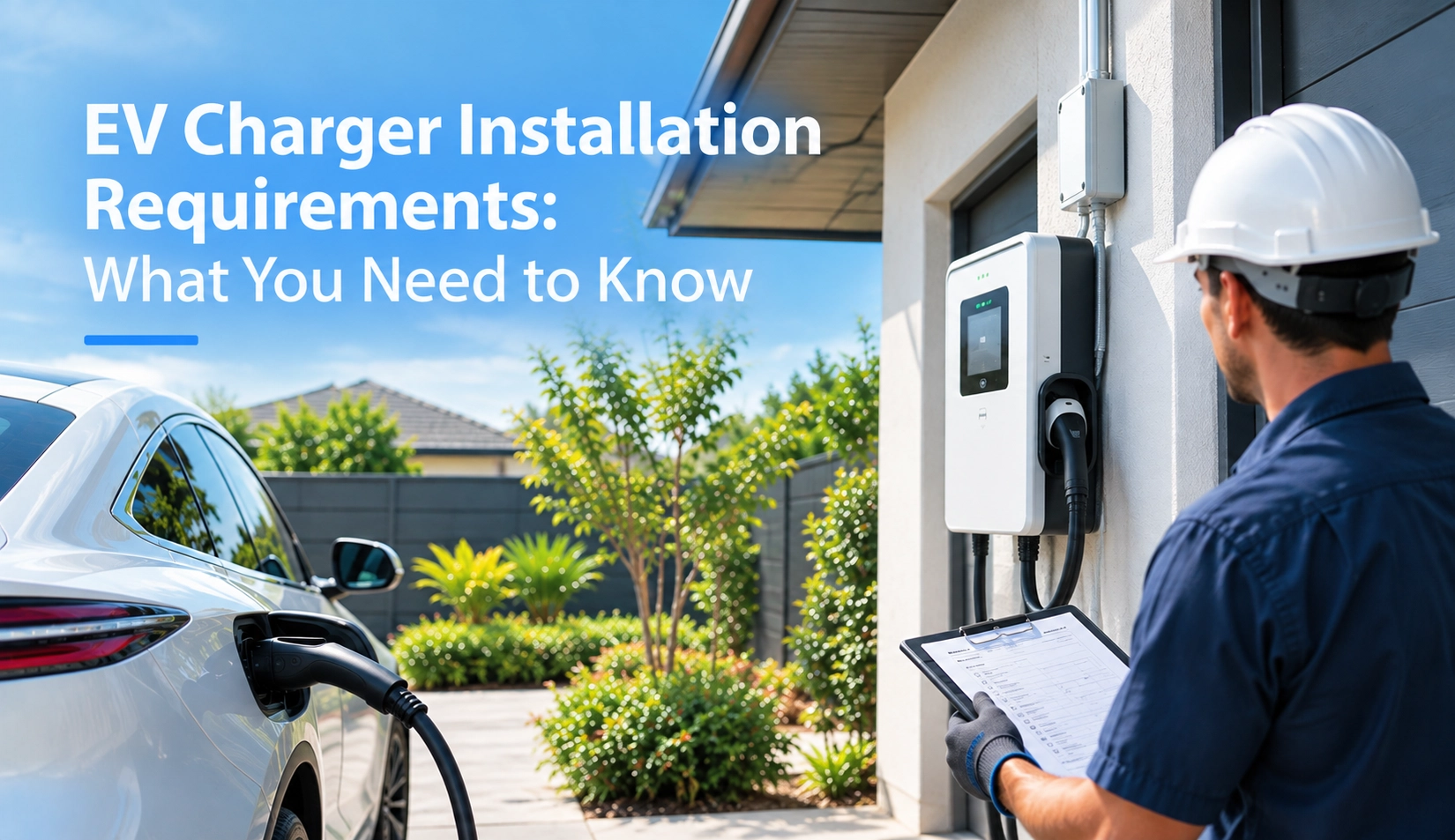
Deploying a Level 2 station requires an evaluation of the site's electrical service entry. Standard modern residential properties feature a 200-amp main service panel, which accommodates a 40A to 50A EV circuit. Older homes equipped with 100-amp panels often face capacity constraints when electric ranges, heat pumps, and air conditioning compressors run concurrently.
Hardware deployments follow two mechanical configurations:
NEMA Receptacle Connection (Plug-In): Uses an industrial-grade NEMA 14-50 or 6-50 outlet. It enables portability and simple replacement of the EVSE unit, but code often requires a supplementary GFCI breaker in the distribution box, which can cause nuisance tripping with EVSE internal self-test circuits.
Hardwired Connection (Permanent Conduit): The unit wires directly into the supply conductors via metallic or PVC conduit. This design eliminates plug resistance points, permits higher continuous amperages (48A to 80A), avoids redundant external GFCI tripping, and offers superior weather resistance for outdoor commercial locations.
Operating a vehicle on Level 2 AC infrastructure provides distinct financial benefits over public DC fast charging and fossil fuels. Level 2 hardware delivers an electrical efficiency rating around 90% to 94%, whereas Level 1 charging loses substantial energy (15% to 25%) to onboard computer wake-states and thermal pump circulation over long runtimes.
Furthermore, modern Level 2 systems incorporate Open Charge Point Protocol (OCPP 1.6J/2.0.1) and ISO 15118 protocols. These open software standards enable:
Automated Time-of-Use (TOU) Dispatch: Delaying charge start times to match midnight off-peak tariff periods.
Dynamic Load Shedding: Throttling station amperage in commercial parking lots when peak facility load triggers utility demand charges.
Renewable Balancing: Modulating output power to absorb real-time solar array generation directly into vehicles.
Level 2 charging remains the foundational architecture of the modern EV ecosystem. By taking advantage of existing split-phase residential and three-phase commercial distribution lines, Level 2 systems strike the ideal balance between installation cost, charging speed, and long-term battery preservation.
Deploying the right Level 2 hardware requires matching your vehicle's internal on-board charger capacity with proper continuous circuit ratings, quality wiring, and smart energy management. Whether configured for a private garage or a scaled commercial parking hub, Level 2 infrastructure ensures consistent operational readiness at the lowest cost per delivered mile.
Authoritative industry references and charging analytics cited in this guide: International Energy Agency (IEA) Global EV Infrastructure Analysis, US Department of Energy (AFDC) Charging Infrastructure Standards, and SAE International J1772 Electric Vehicle Conductive Charge Coupler Technical Specifications.