Oct 06, 2026

Aug 27, 2026
The Combined Charging System Type 2 (CCS2) is the mandatory European and dominant global standard for electric vehicle charging, uniting both single/three-phase AC destination charging and high-power DC fast charging up to 350 kW—and beyond 500 kW with liquid-cooled cables—into a single vehicle inlet.
1. What Is CCS2 Charging? (The Anatomy of the "Combo 2" Inlet)
3. Power Limits, Voltage Architectures & Liquid Cooling Realities
4. Global Fast-Charging Standards Comparison: CCS2 vs. CCS1 vs. GB/T vs. NACS
In my 30-plus years watching industrial standards fight it out on factory floors—from serial fieldbuses to automation protocols—nothing matches the early chaos of EV charging connectors. Thankfully, the International Electrotechnical Commission brought sanity to the European and international landscape through IEC 62196-2 and IEC 62196-3, codifying what we know today as CCS2 (Combined Charging System Type 2).
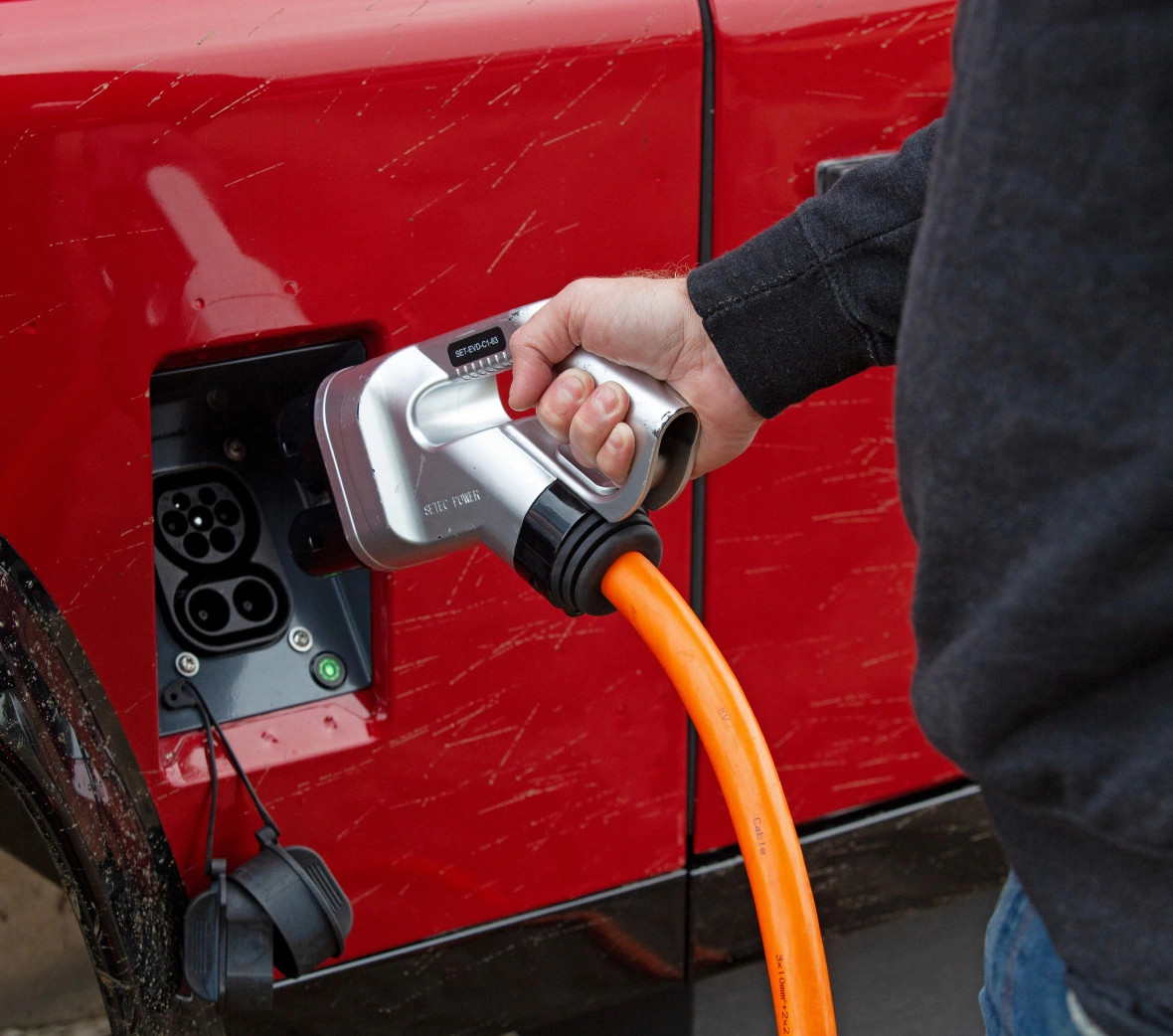
The genius of CCS2 lies in its unified form factor. Instead of forcing automakers to stamp two separate access doors into a vehicle's bodywork (one for slow daily AC charging and another for highway fast charging), CCS2 merges both into an integrated 9-pin port:
Upper Section (7-Pin Type 2 / Mennekes interface): Handles single-phase or three-phase Alternating Current (AC) for overnight residential wallboxes and public destination chargers (typically 7.4 kW to 22 kW, up to 43 kW in commercial settings). It also carries the Control Pilot (CP) and Proximity Pilot (PP) communication lines.
Lower Section (2 Heavy-Duty DC Pins): Features large copper contacts dedicated exclusively to high-amperage Direct Current (DC) electricity, channeling energy straight to the vehicle's traction battery.
FAQ: Can I plug a standard Type 2 AC cable into a CCS2 vehicle socket?
Yes, absolutely. The upper half of your vehicle's CCS2 inlet is a standard Type 2 socket. When charging at home or an AC street post, simply insert the Type 2 plug into the upper port; the two lower DC pins remain safely covered by their rubber weather seal.
To truly grasp why charging speeds vary wildly between a garage wallbox and a highway corridor charger, you have to look inside the vehicle chassis. Every electric car battery stores electrochemical potential strictly in Direct Current (DC). However, national power grids distribute Alternating Current (AC) because AC step-up transformers make long-distance high-voltage transmission efficient.
| Engineering Dimension | AC Destination Charging (Type 2 Mode) | DC Fast Charging (CCS2 Combo Mode) |
|---|---|---|
| Power Inversion Location | Onboard the EV (Internal On-Board Charger / OBC) | Inside the external charging station power cabinet |
| Power Limits | 7.4 kW (Single-phase) to 11 kW / 22 kW (3-Phase) | 50 kW to 350 kW+ (Scaling past 500 kW) |
| Thermal Bottleneck | OBC size, weight, and vehicle heat dissipation | Cable thermal limits and battery cell absorption rate |
| Best Use Case | Overnight home charging, depot parking (6–10 hrs) | Highway long-haul stops, quick turnaround (15–30 mins) |
When you plug into an AC source, your car's On-Board Charger (OBC) acts as the converter. Because an OBC adds vehicle weight and cost, automakers cap them at 11 kW or 22 kW. But when you lock into a high-voltage DC Fast Charger, industrial-grade silicon-carbide (SiC) inverters inside the ground station convert megawatts of power externally, bypassing the OBC entirely to pump DC power straight to the battery pack.
The theoretical ceiling of the CCS2 specification is defined by basic electrical physics: Power (kW) = Voltage (V) × Current (A) / 1000. Standard air-cooled CCS2 charging cables hit thermal thresholds around 200A to 250A of continuous current. Pushing past that without active cooling will literally melt the copper conductor insulation or trigger automatic thermal safety cutoffs.
To deliver modern 350 kW to 400 kW peak rates, the industry deploys two crucial engineering breakthroughs:
800V/1000V Native Pack Architecture: Vehicles like the Porsche Taycan, Hyundai Ioniq 5, and modern commercial e-buses operate on ~800-volt architectures. Doubling the voltage from 400V to 800V allows the system to double the wattage output while maintaining the same current, significantly reducing resistive heat loss ($I^2R$).
Active Liquid-Cooled Charging Cables: Utilizing synthetic hydrocarbon or glycol-water coolant channels directly around the high-current DC busbars allows cables to handle 500A continuous (and up to 800A boost cycles) while maintaining a lightweight, ergonomic outer profile that any driver can easily handle.
FAQ: Will plugging a 150 kW vehicle into a 350 kW CCS2 station damage my battery?
Never. In industrial power delivery, current is drawn by the receiver, not forced by the source. The vehicle's Battery Management System (BMS) executes a continuous digital negotiation with the charger via DIN 70121 or ISO 15118 protocols, commanding the station to output only the exact voltage and current the battery can safely absorb at that specific temperature and state of charge.
Global EV infrastructure remains fragmented by regional electrical topologies. For multinational fleet operators, OEMs, and charging infrastructure developers, matching the physical connector and digital protocol to the deployment region is vital.
| Standard | Primary Geographic Markets | AC Grid Support | Max DC Power (Liquid-Cooled) | Inlet Physical Integration |
|---|---|---|---|---|
| CCS2 (Combo 2) | Europe, Australia, NZ, MEA, Southeast Asia, India | Single-phase & 3-phase AC (up to 43 kW) | 350 kW – 500+ kW (1000V / 500A+) | Unified single inlet (Type 2 + DC pins) |
| CCS1 (Combo 1) | North America (legacy), South Korea | Single-phase AC only (up to 19.2 kW) | 350 kW (1000V / 350–500A) | Unified single inlet (Type 1 J1772 + DC pins) |
| GB/T (20234.3) | Mainland China | Separate physical port required | 250 kW (ChaoJi standard scaling to 900 kW) | Dual separate ports (1 for AC, 1 for DC) |
| NACS (SAE J3400) | North America (Rapidly Expanding) | Single-phase AC (Pins shared with DC) | 350 kW – 500+ kW (1000V / 500A) | Compact dual-pin shared AC/DC design |
While North America undergoes a major pivot toward SAE J3400 (NACS), CCS2 remains the unquestioned, mandated standard across the European Union, the United Kingdom, Oceania, and large swathes of South America and Asia. Its compatibility with standard three-phase industrial grids makes it technically superior for regions running 400V grid power.
Installing commercial CCS2 charging infrastructure involves more than simply bolting a pedestal into concrete. High-power DC charging draws substantial electrical capacity from medium-voltage utility networks. For logistics depots, retail parking hubs, and fleet hubs, choosing reliable hardware makes the difference between consistent uptime and costly equipment failures.
When selecting your charging hardware, prioritize these engineering specifications:
Open Charge Point Protocol (OCPP) 2.0.1 Compliance: Ensures your hardware communicates seamlessly with third-party billing, remote telemetry, and fleet scheduling software.
Dynamic Power Sharing & Modular Inverters: Choosing charging stations equipped with modular power rectifiers ensures that if one 30 kW power module drops offline, the remaining modules keep the station operational. Deploying an enterprise-grade CCS Charger with automated load balancing protects local transformers from peak utility demand charges.
Robust Ingress & Mechanical Protection: Look for certified IP55/IP65 ingress sealing and IK10 impact-rated enclosures to withstand extreme ambient temperatures (-30°C to +50°C) and heavy daily commercial use.
CCS2 has earned its place as the backbone of global electrification by solving the split between residential AC overnight parking and high-speed highway DC charging. By incorporating three-phase AC support and high-voltage DC delivery in a single robust footprint, it provides vehicle manufacturers, charging operators, and EV drivers with a proven, future-proof framework.
Whether you are designing a public highway fast-charging plaza, electrifying a commercial delivery fleet, or purchasing your first long-range electric vehicle, understanding the capabilities and standards of CCS2 ensures your charging infrastructure investments remain dependable, safe, and ready for the next decade of battery advancements.
Authoritative industry references and charging market analytics cited in this guide: International Energy Agency (IEA) Global EV Infrastructure Report, CharIN (Charging Interface Initiative) CCS Specification Roadmap, and BloombergNEF Global EV Infrastructure Outlook.