Oct 15, 2026

Oct 14, 2025
Introduction
With the rapid development of the global electric vehicle market, Battery Management Systems (BMS) have become the key technology ensuring safe, efficient, and reliable electric mobility. As the "intelligent brain" of battery packs, BMS operates safely and reliably in complex application environments through real-time monitoring, intelligent protection, and precise management, which is directly related to driver safety and vehicle performance.
Understanding what BMS means is essential for anyone involved in electric mobility, from vehicle owners to charging station operators. This comprehensive guide explores the fundamentals of battery management systems, their critical role in electric vehicles, and their crucial interaction with charging infrastructure.
A battery management system (BMS) is an intelligent electronic control unit that monitors, manages, and protects battery packs, primarily evaluating lithium-ion battery systems. Serving as the intelligent interface between battery cells and the electrical system, the BMS ensures safe and efficient battery operation throughout its lifecycle.
BMS can prevent abnormal conditions such as overcharging, overcurrent, and overtemperature to extend battery life; monitor battery state of health (SoH) and battery status (SoC); and provide cell balancing, environmental control, and data reporting, providing comprehensive assurance for stable battery system operation.
Core Components
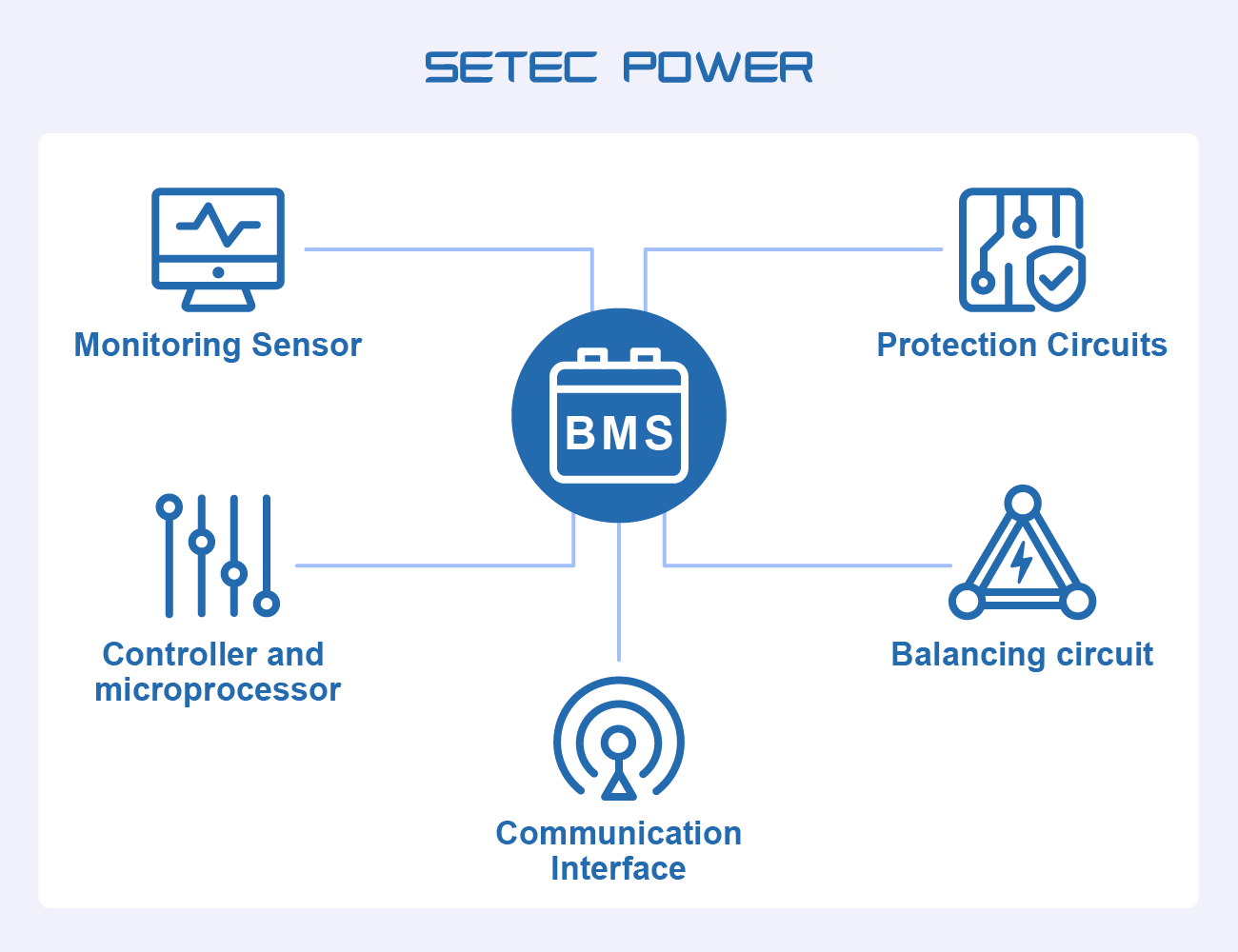
Modern battery management systems consist of five core components working in precise coordination to form a complete battery monitoring and protection network:
Monitoring Sensor: Real-time monitoring of critical parameters like voltage, current, and temperature to ensure battery operation visibility
Controller and microprocessor: Processes data collected by sensors to assess the battery's health and remaining charge, ensuring optimal battery performance
Balancing circuit: The charge of all battery cells is evenly distributed to prevent overcharge or overdischarge of individual battery cells and extend battery life
Protection Circuits: Provide protection against short circuits, overcurrent, overheating and other faults, immediately cutting circuits in dangerous situations
Communication Interface: Supports protocols like CAN, UART and RS485 for data exchange and coordinated operation between BMS and external devices
These components work together to ensure safe, efficient, and reliable battery system operation across various application scenarios.
The Battery Management System (BMS) ensures safety, performance, and lifespan by continuously monitoring, controlling, and optimizing battery pack operations. It achieves this through several key mechanisms:
Three Core Functions
Battery Protection
The BMS prevents overcharging, over-discharging, and overheating, ensuring cells always operate within safe parameters and avoiding safety incidents caused by abnormal voltage or temperature conditions.
Real-Time Monitoring
The BMS continuously tracks key metrics such as voltage, current, and temperature, recording data in real-time to provide accurate information for vehicle control systems and operations personnel.
Health & Balancing Management
The BMS extends overall battery pack lifespan through SOH (State of Health) assessment and individual cell voltage balancing, preventing capacity degradation caused by cell performance variations.
Working Principle
The BMS acts as a central controller (typically a microcontroller or DSP), responsible for collecting sensor inputs, executing control and safety algorithms, managing battery balancing circuits, and interfacing with external devices to ensure the battery system operates safely and efficiently. It continuously adjusts outputs based on battery state, usage patterns, and environmental conditions to optimize performance and lifespan.
When problems arise, the BMS automatically responds by:
Adjusting cooling systems to manage temperature
Balancing cell voltages through charge redistribution
Implementing protective shutdowns when necessary
Recording all data for future analysis and health assessment
This protective approach explains why lithium batteries stop working suddenly rather than gradually declining - the BMS prioritizes safety over convenience.
Why is a BMS Critical for Electric Vehicles
Electric vehicles store massive amounts of energy in compact battery systems, creating unique safety and performance challenges that demand intelligent management. The Electric Vehicle Battery Management System Market size is estimated at USD 16.17 billion in 2025, and is expected to reach USD 42.41 billion by 2030, at a CAGR of 21.27%, reflecting the critical importance of these systems.
Critical Areas Where BMS Makes a Difference
Safety Protection
Performance Optimization
The system balances battery cells and manages energy flow to maximize driving range while maintaining consistent vehicle performance throughout the battery's operational life. This optimization directly impacts the miles per charge an EV can deliver.
Economic Benefits
In maximizing the lifetime value of the battery, BMS solutions help reduce the cost of EV ownership. Proper BMS management extends battery life beyond typical expectations, saving owners significant replacement costs while maintaining vehicle value.
Grid Integration Benefits
Advanced BMS systems enable smart charging capabilities and vehicle-to-grid (V2G) functionality, allowing EVs to participate in energy management and grid stabilization efforts.
Applications of the Electric Vehicle BMS
1. BESS
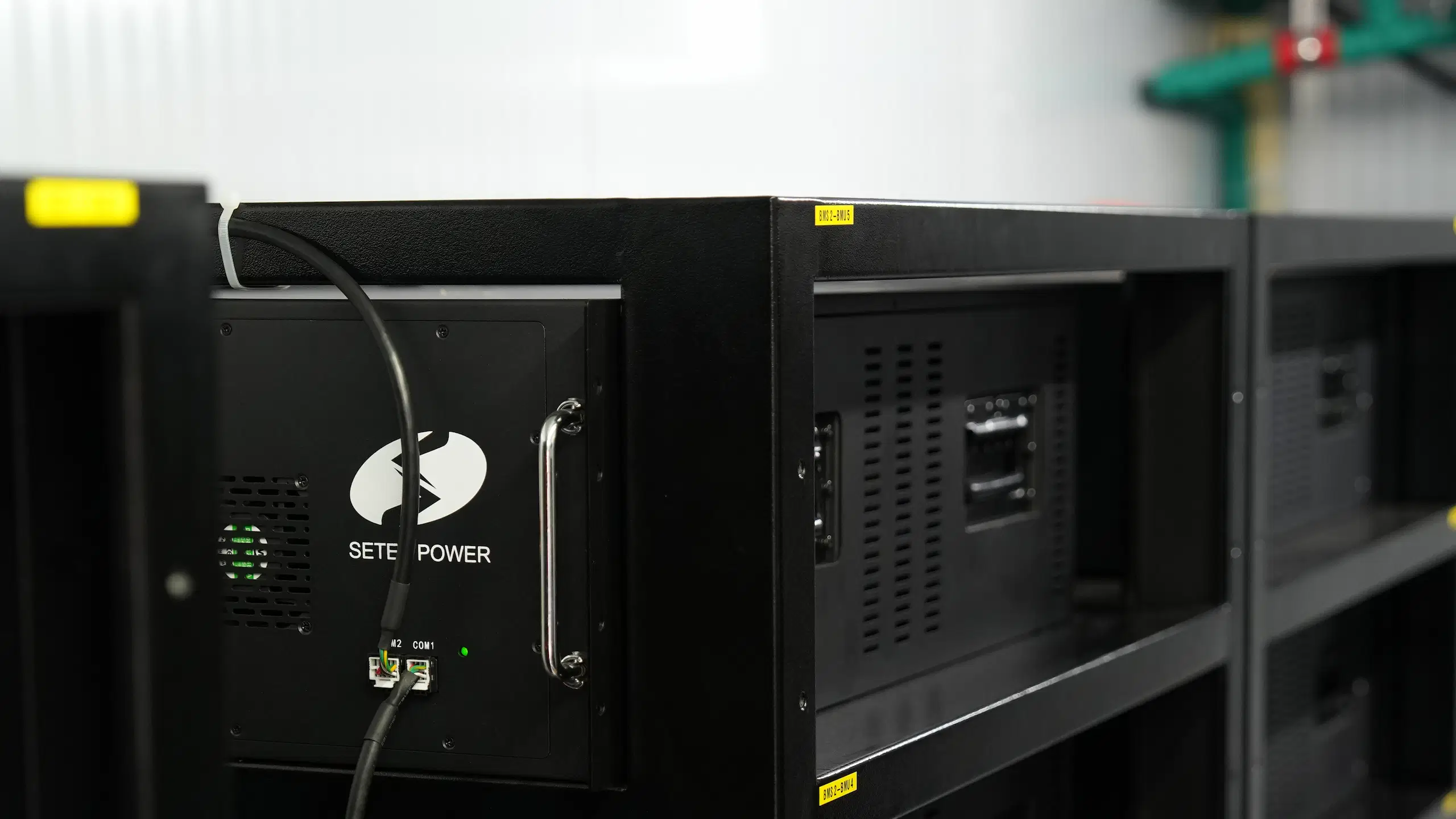
The BMS (Battery Management System) is a core component of the BESS, responsible for monitoring, managing, and protecting the battery pack to ensure its safe operation. While the BESS stores and releases electricity, the BMS ensures the health, lifespan, and safety of the battery pack, making it a key technology for realizing BESS functionality.
2. Heavy-Duty Truck Fleets
SETEC POWER’s self-developed BMS is the backbone of our energy and charging solutions. From large-scale BESS to urban service fleets, heavy-duty trucks, our BMS ensures safety, reliability, and efficiency, empowering customers to advance electrification with confidence.
The interaction between battery management systems and charging infrastructure represents a critical communication process that ensures safe, efficient power delivery to electric vehicles.
Basic Interaction Process
Connection Establishment
When an electric vehicle connects to a charging station, the vehicle's communication controller initiates contact through standardized protocols like ISO 15118. The system performs safety checks and establishes a secure communication channel between vehicle and charging infrastructure.
Information Exchange
The BMS provides critical battery data through the vehicle's communication system. This information exchange includes several key parameters:
Current state of charge (SOC)
Battery temperature and voltage levels
Acceptable charging limits and power requirements
Battery chemistry specifications and condition
Parameter Negotiation
Based on received battery information, the charging station and vehicle negotiate optimal charging parameters. This includes determining safe voltage and current levels, charging duration, and any special requirements for the specific battery chemistry and condition.
Dynamic Monitoring
Throughout charging, the BMS continuously monitors battery conditions and communicates changes to the charging station. The system can dynamically adjust charging parameters based on temperature changes, voltage variations, or other safety considerations.
Session Completion
When charging reaches completion or safety conditions require termination, the BMS signals through the vehicle's communication system to safely end the session, ensuring proper disconnection procedures.z
Different Interaction Methods
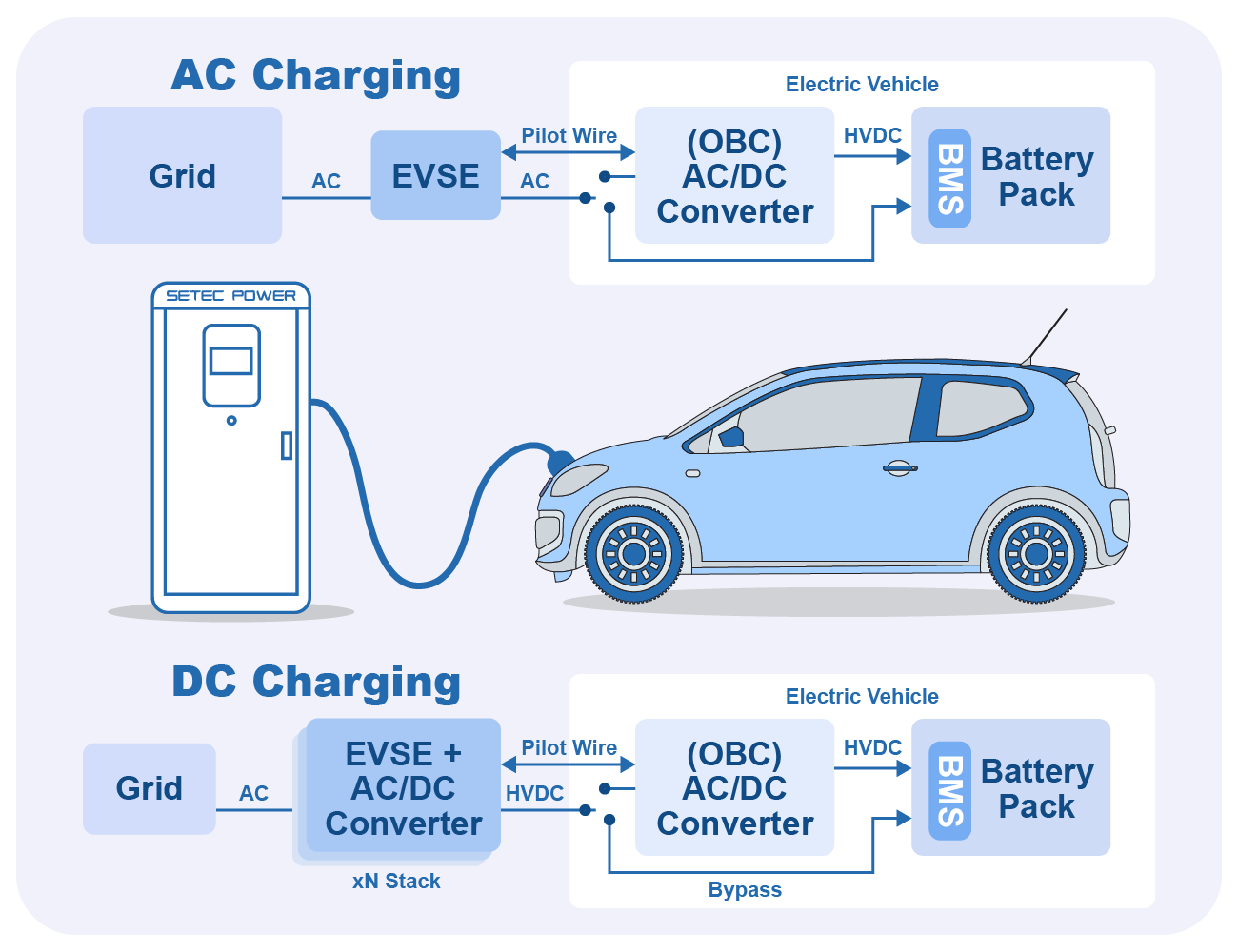
AC Charging Interaction
DC Fast Charging Interaction
In DC fast charging, DC power is delivered directly to the battery, bypassing the OBC. The BMS interacts with the charging station in real time through a complex communication protocol, providing continuous feedback on the battery's acceptable voltage, current, and safety range. This feedback determines the charging power curve, ensuring rapid charging while protecting battery life.
1. How to reset the Battery Management System?
The BMS reset method varies by vehicle model. It's recommended to first consult the owner's manual. Here are the general reset steps:
Deep Discharge: Drive the vehicle until the battery drops around 10%
Stabilization: Let the battery sit for 1 hour, occasionally checking vehicle status to keep system active
Full Charge: Set charging limit to 100% and charge completely without interruption
System Calibration: BMS will relearn the battery's true capacity and performance during this complete cycle
2. How does a BMS extend battery life?
BMS balances cell voltages, prevents overcharging and over-discharging, and manages battery temperature, effectively reducing operating stress on the battery, thereby extending its lifespan and maintaining stable performance.
3. What are the signs of Battery Management System malfunction?
Range Reduction: Significantly decreased driving range compared to normal operation
Charging Problems: Difficulty charging, premature charging termination, or unusual charging behavior
Warning Messages: Dashboard alerts specifically mentioning battery management system errors
Abnormal Heating: Excessive heat generation during operation or charging
Performance Inconsistency: Irregular power delivery or unexpected power limitations
The Battery Management System (BMS) serves as the "intelligent guardian" of battery packs, ensuring safe and efficient battery operation through monitoring, protection, and balancing management. This article systematically elaborates on BMS's critical role in energy storage systems, electric vehicle applications, and charging infrastructure interactions, starting from its concept and working principles. As the core support for electric vehicles and energy storage technology, BMS establishes a solid technical foundation for electrification transformation and sustainable energy development.