Sep 20, 2026

Aug 14, 2026
Charging an electric car generally costs anywhere from $5 to $50, heavily dependent on your battery capacity, electricity rates, and charging network selection. According to recent 2026 data analytics from BloombergNEF, home residential charging remains up to 60% cheaper than public DC fast charging, establishing smart overnight habits as the definitive gold standard for lowering overall operating expenditures.
1. How Do You Calculate the Cost of Charging an Electric Car?
4. Can Time-of-Use Electricity Rates Reduce EV Charging Costs?
5. How Much Does It Cost to Charge an EV at a Public Charging Station?
The cost of charging an electric car is one of the biggest advantages of switching from a gasoline-powered vehicle to an electric vehicle. While an electric vehicle may have a higher purchase price in some cases, its energy and maintenance costs can be significantly lower over time. So, how much does it actually cost to charge an electric car? The answer depends on several factors, including your vehicle's battery capacity, electricity rates, charging location, charger type, charging level, time of day, and how much energy your vehicle uses.
As a general estimate, charging an EV can cost anywhere from $5 to $50, depending on the vehicle and where you charge it. Home charging is usually the most affordable option, while DC fast charging typically costs more because of its higher power output and infrastructure costs. The basic calculation is relatively simple:
Charging Cost = Electricity Used (kWh) × Electricity Price ($/kWh)
For example, if your EV needs 60 kWh of electricity and your electricity rate is $0.20 per kWh: $60 imes $0.20 = $12$. However, real-world charging costs can be slightly higher because some electricity is lost during the charging process. A more practical calculation includes efficiency:
Charging Cost = Energy Required × Electricity Rate ÷ Charging Efficiency
For most EV owners, home charging is the cheapest and most convenient way to charge. Home charging allows you to use the electricity supplied by your utility rather than paying the additional costs associated with public charging infrastructure. According to energy infrastructure studies from the International Energy Agency (IEA), over 70% of all electric vehicle charging globally occurs at residential locations overnight.
| Battery Capacity | Electricity Rate | Approx. Cost to Add 100% Battery |
|---|---|---|
| 40 kWh | $0.15/kWh | $6.00 |
| 60 kWh | $0.15/kWh | $9.00 |
| 75 kWh | $0.20/kWh | $15.00 |
| 100 kWh | $0.20/kWh | $20.00 |
| 100 kWh | $0.30/kWh | $30.00 |
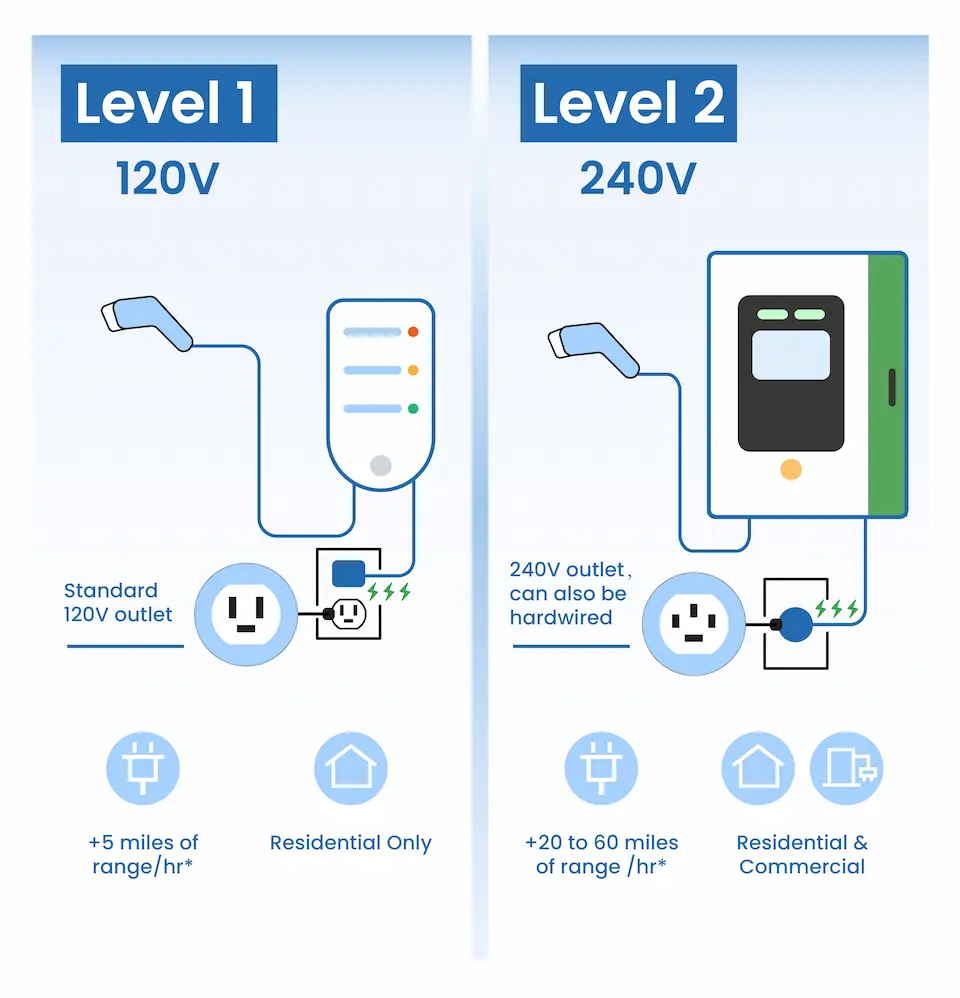
There are two common types of home EV charging. Level 1 charging uses a standard household electrical outlet and provides relatively low charging power. It can be useful for drivers with low daily mileage, but charging a large battery can take many hours. Level 2 charging uses a higher-voltage electrical connection and can provide significantly more power. It is generally the preferred option for regular home EV charging because it can replenish much more energy during an overnight charging session.
Yes. Some electricity providers offer time-of-use (TOU) pricing, meaning electricity costs different amounts depending on the time of day. During periods of high electricity demand, rates can be higher. During overnight or other off-peak periods, rates may be lower. For example, charging 40 kWh at a peak rate of $0.30/kWh costs $12, while charging during an off-peak rate of $0.15/kWh costs just $6.
Public charging generally costs more than home charging, but it provides convenience when you are away from home. Public charging prices can vary significantly by location, network, charger type, and pricing model.
| Charging Type | Typical Price Range |
|---|---|
| Home charging | $0.10–$0.30+/kWh |
| Public Level 2 | $0.20–$0.50/kWh |
| DC Fast Charging | $0.35–$0.60+/kWh |
DC fast charging stations require significantly more expensive infrastructure than residential chargers. Site owners must pay for high-capacity electrical connections, transformers, high-power charging hardware, construction, networking systems, maintenance, demand charges, and land costs. The higher price reflects much more than simply the electricity itself.
Most EV drivers don't regularly charge from 0% to 100%. A common charging range is approximately 10% to 80%, especially when using DC fast charging during a road trip. For a 75-kWh battery, charging from 10% to 80% adds approximately 52.5 kWh.
At $0.15/kWh: $7.88
At $0.20/kWh: $10.50
At $0.30/kWh: $15.75
At $0.50/kWh: $26.25
There isn't one universal EV charging price. Several factors influence the final cost:
Electricity Rates: Vary by state, utility provider, and time of day.
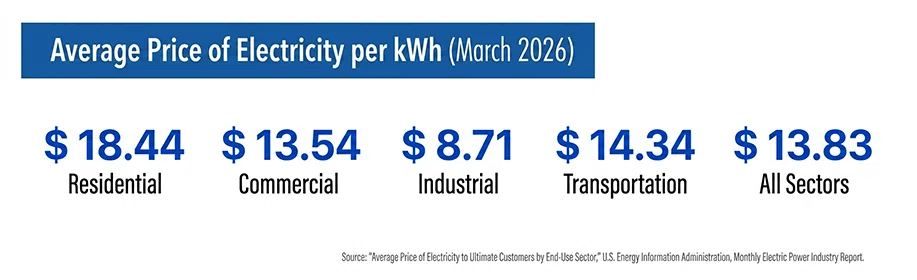
The U.S. Energy Information Administration (EIA) tracks average electricity prices by sector and state, as shown in the table below.
Battery Capacity: Larger packs require more total energy.
Vehicle Efficiency: Aerodynamics, weight, and drivetrain design dictate energy consumption per mile.
Charger Type: Home AC vs. public DC fast charging.
Location: Urban vs. rural or workplace vs. highway corridors.
Charging Losses: Heat dissipation during AC/DC conversion.
In many cases, yes. Consider a gasoline car getting 30 mpg at $4/gallon ($0.13/mile). An EV consuming 30 kWh per 100 miles at $0.20/kWh costs $6 per 100 miles, or about $0.06 per mile. The EV costs less than half as much to operate based on energy expenses alone.
If you have rooftop solar panels, you can use excess solar generation to charge your EV. While the solar setup requires upfront capital expenditure, utilizing midday surplus energy provides some of the lowest marginal charging costs available to homeowners.
Charge during off-peak hours using automated timers.
Rely primarily on home AC charging whenever possible.
Use DC fast charging strategically for road trips rather than daily routines.
Leverage surplus rooftop solar energy.
Compare public charging network membership rates.
Q: How much does it cost to fully charge an electric car?
A full charge can cost anywhere from $5 to $30 or more depending on battery size, electricity rates, and location.
Q: Is it cheaper to charge an EV at home?
Yes, home charging avoids public infrastructure markups and utility demand fees.
Q: Is DC fast charging expensive?
It is typically the most expensive option per kWh due to heavy commercial infrastructure costs, but unmatched in speed.
Understanding EV charging costs helps drivers make smarter decisions about where, when, and how they power their vehicles. By combining home charging, off-peak electricity, and smart energy strategies, EV owners can enjoy remarkably low operating expenses.
Industry reports and market data references: BloombergNEF EV Infrastructure Outlook and International Energy Agency (IEA) Global EV Outlook.