Sep 20, 2026

Aug 07, 2026
The DC fast charging (DCFC) feeds a high-voltage direct current straight to the electric vehicle's battery, returning up to 80 percent of its range in 20-60 minutes.The latest 2026market research from organizations such as BloombergNEF shows that robust fast-charging networks are the main factor driving the global adoption of zero-emission fleet and commercial vehicles.
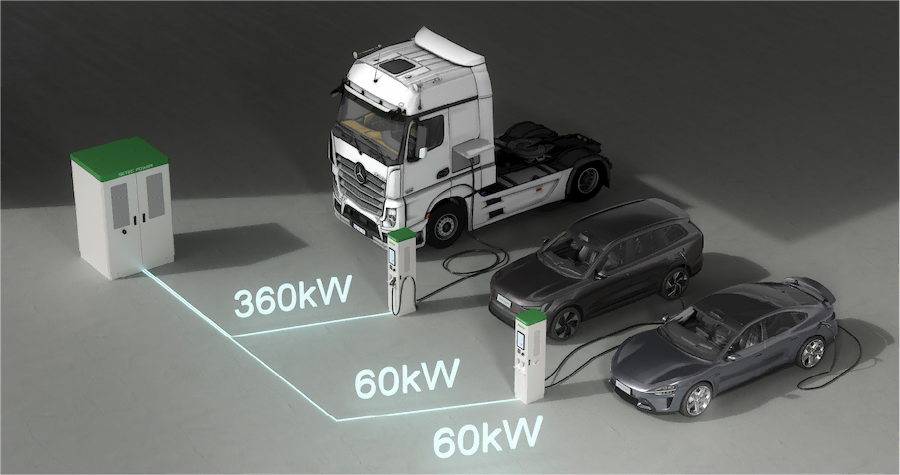
Charging speed remains one of the biggest factors influencing electric vehicle (EV) adoption. While EV battery technology continues to improve, many drivers still worry about long charging times compared with traditional gasoline vehicles.
Among all EV charging methods, DC fast charging (DCFC) is currently the fastest charging technology available. Unlike slower AC charging methods, DC fast charging delivers electricity directly to the vehicle battery, significantly reducing charging time.
For long-distance travel, commercial fleets, and public charging networks, DC fast charging has become a critical part of modern EV infrastructure.
DC fast charging, also known as Level 3 charging, is an EV charging method that uses direct current (DC) electricity to charge an electric vehicle battery directly.
Unlike AC charging, where electricity must first be converted by the vehicle’s onboard charger, DC fast charging performs the AC-to-DC conversion inside the charging station. This allows much higher power delivery and faster charging speeds.
In simple terms:
AC charging: Grid power → EV charger → onboard charger → battery
DC fast charging: Grid power → charging station → battery directly
Most modern DC fast chargers provide between:
50 kW–150 kW: Standard fast charging
150 kW–350 kW: High-power fast charging
350 kW+: Ultra-fast charging systems
Future megawatt charging systems (MCS) are being developed for heavy-duty electric trucks and large commercial vehicles.
Before understanding DC fast charging, it is important to understand the three main EV charging levels.
Level 1 charging uses a standard household outlet.
Voltage: 120V AC (North America)
Power output: Around 1–1.8 kW
Charging speed: About 3–7 miles of range per hour
Because of its slow charging speed, Level 1 is mainly used for emergency charging or drivers with low daily mileage.
Level 2 charging is the most common charging method for homes, workplaces, and commercial locations.
Voltage: 208–240V in North America, 230–400V in Europe
Power output: 3 kW–22 kW
Charging speed: Around 10–75 miles of range per hour
Level 2 chargers are suitable for overnight charging because they balance charging speed and installation cost.
DC fast charging provides the highest charging speed currently available for passenger EVs.
Power output: 15 kW–350+ kW
Charging time: Usually 20–60 minutes to reach around 80%
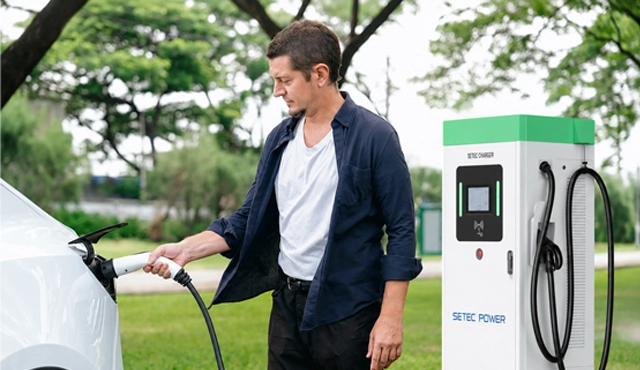
DC fast chargers are commonly installed at highway rest areas, shopping centers, fleet charging facilities, and public charging hubs.
Electric grids supply electricity as alternating current (AC). Because lithium-ion batteries store energy as direct current (DC), electricity must be converted before charging.
Inside a DC fast charger, powerful converters transform AC electricity into high-voltage DC power. This allows electricity to flow directly into the battery pack.
The EV’s Battery Management System (BMS) continuously communicates with the charger. It monitors battery temperature, voltage, current, state of charge (SoC), and maximum charging capability. The BMS adjusts charging speed to protect battery health.
The actual charging speed depends on charger power output, vehicle battery capacity, battery acceptance rate, temperature, and state of charge.
| DC Charger Power | Charging Capability |
|---|---|
| 50 kW | Standard fast charging |
| 100 kW | Faster public charging |
| 150 kW | High-speed charging |
| 250 kW | Ultra-fast charging |
| 350 kW | Maximum current passenger EV charging |
A modern EV equipped with a large battery may charge from 10% to 80% in approximately 20–40 minutes when connected to a high-power DC charger.
Every EV battery has a maximum charging power limit. For example, if a charger outputs 350 kW but your vehicle acceptance rate is 150 kW, the vehicle will only charge at approximately 150 kW. Battery charging capability depends on battery chemistry, size, thermal management, and vehicle design.
Charging speed is not constant throughout the process:
10%–50%: Maximum charging speed
50%–80%: Charging speed gradually decreases
80%–100%: Charging becomes significantly slower
Cold temperatures slow chemical reactions inside batteries, while high temperatures increase thermal stress. Modern EVs use thermal management systems to maintain optimal temperatures.
The charging station itself may limit charging speed based on available grid power, charger design, simultaneous vehicle usage, and cooling capability.
High-power charging creates heat in cables, connectors, power electronics, and battery cells. Modern charging systems use liquid-cooled cables and active cooling systems to maintain safe operation.
| Feature | AC Charging | DC Fast Charging |
|---|---|---|
| Power conversion | Inside vehicle | Inside charger |
| Charging speed | Slow to medium | Fast |
| Typical power | 3–22 kW | 50–350+ kW |
| Best use | Home/work charging | Public charging and long trips |
| Installation cost | Lower | Higher |
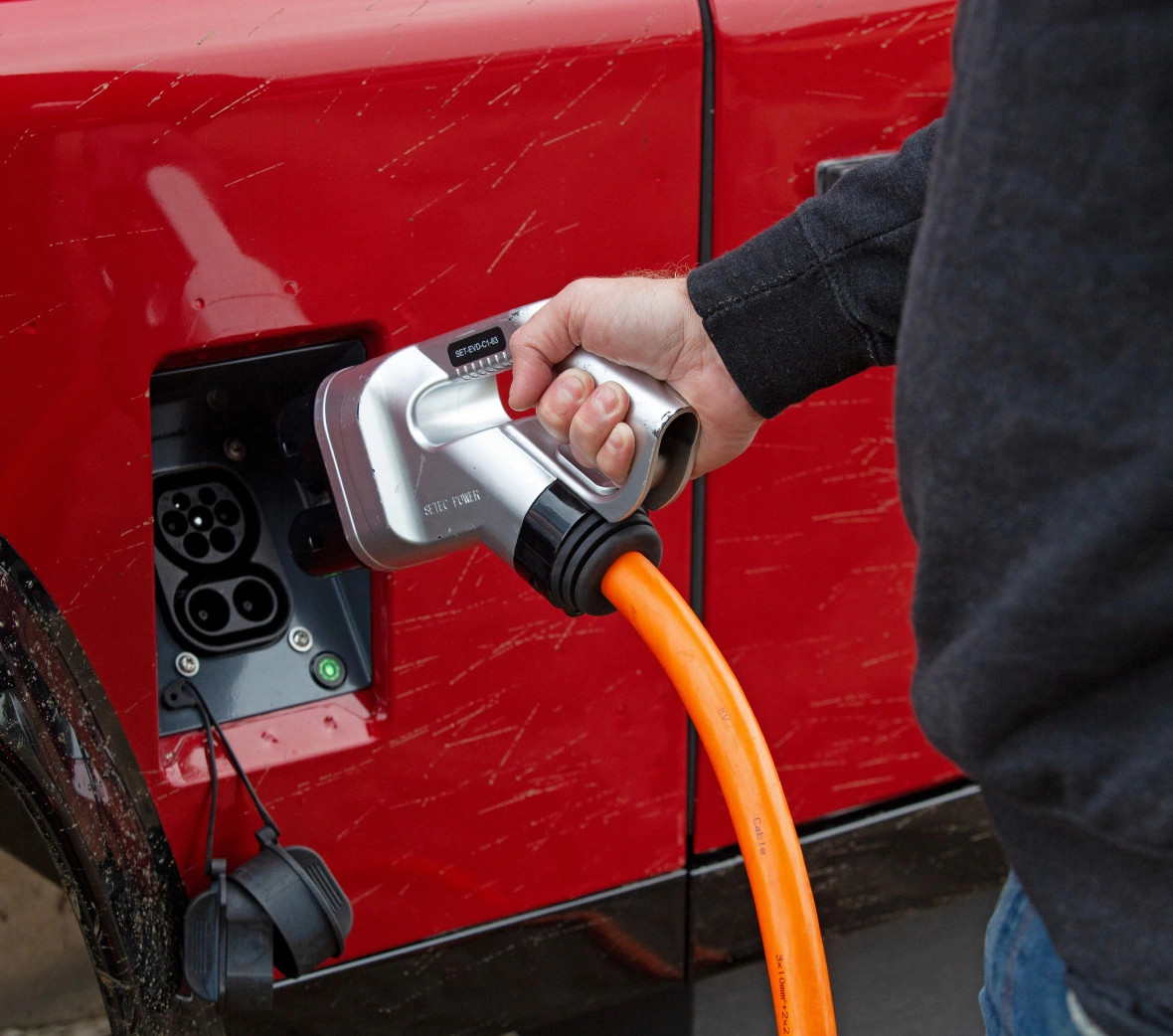
CCS (Combined Charging System): Widely used in North America and Europe, supporting both AC and DC charging.
CHAdeMO: Developed in Japan and widely used by early EV models.
GB/T: Mainly used in China.
NACS: A charging standard increasingly adopted across North America.
A common concern is whether frequent DC fast charging damages EV batteries. Modern EVs use advanced Battery Management Systems (BMS) that control charging speed, temperature, and voltage limits. While frequent high-power charging may create more battery stress compared with slower AC charging, the impact is usually limited when proper thermal management is used.
Use DC fast charging when needed.
Avoid keeping the battery at 100% for long periods.
Use AC charging for daily charging when convenient.
Because DC fast chargers require significant electrical infrastructure, they are mainly installed in commercial locations such as highway charging stations, shopping centers, parking facilities, fleet depots, and transportation hubs.
The cost of DC fast charging depends on electricity prices, charging network fees, location, and charging speed. Public DC chargers may charge users based on electricity consumed (kWh), charging time, or membership plans.
EV charging technology continues to advance with developments including 800V vehicle platforms, higher-power charging stations, megawatt charging systems, improved battery technology, and faster charging networks.
DC fast charging is one of the most important technologies supporting electric vehicle adoption. By delivering high-voltage direct current directly to EV batteries, DC fast chargers dramatically reduce charging times compared with traditional AC charging.
Although charging speed depends on battery capacity, charger power, temperature, and vehicle design, modern DC fast charging can recharge many EVs to 80% within 20–60 minutes.
For public charging infrastructure, commercial fleets, and long-distance EV travel, DC fast charging will remain a key technology driving the future of electric transportation.
Commercial data and industry research references utilized: BloombergNEF EV Infrastructure Outlook and International Energy Agency (IEA) Global EV Outlook.